Manchester United Jerseys 2026 | Full Range
soccer · Premier League
Manchester United Jerseys
Twenty English league titles, three European Cups, and a stadium that has been the club's home since 1910 — 281 pieces in stock.
The short version
Manchester United began in 1878 as Newton Heath LYR, a works team formed by the carriage and wagon department of the Lancashire and Yorkshire Railway. It took the name Manchester United in 1902 and moved into Old Trafford in 1910 — a ground it has occupied ever since, and which now seats around 74,000.
The modern identity was built twice. First by Matt Busby, whose young side won consecutive league titles in the mid-1950s before eight players were killed in the Munich air disaster of February 1958. Ten years later Busby's rebuilt team became the first English club to lift the European Cup. Then by Alex Ferguson, who arrived in 1986 and won 38 trophies across 26 years, including the 1999 treble of Premier League, FA Cup and Champions League.
Franchise file
The essentials, exactly as they read on the record books.
What they have won
The short answer, without the trophy cabinet.
Manchester United is one of the more decorated names in soccer, and the trophy list is the first thing most fans bring up.
Rather than list every honour, it is worth knowing which ones actually show up on a shirt — and which exist only in the trophy cabinet.
Red, and a name that was written back onto the shirts
Manchester United's red is the least interesting thing about its identity, because the club's real story is written in the back of the shirt rather than the front.
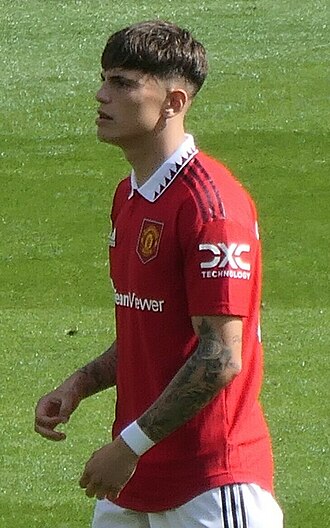
The club wears red, and has for essentially its entire modern life — the colour was adopted after the financial rescue in 1902 and has not meaningfully changed since. What separates editions is the shade, the collar, the sponsor-free era versus the sponsored one, and the trim, and because the palette is so stable a vintage United shirt is recognisable at a glance. That stability has a specific commercial effect: the same silhouette works across every era, so the retro and current ranges are easy to wear together and the range is unusually broad, with home, away and third designs, training kit, shorts and full kids' sets sitting side by side across several seasons at once.
The number culture is the most famous in English football. #7 and #10 between them carry most of the club's iconic identity across two decades, and the twentieth-century numbers still turn up on retro designs from the Busby and Ferguson years. That is the direct consequence of English football's long tradition of continuity — unlike American sports, there is no league-wide retired-number system, so a great player's number stays available and keeps reappearing. The 1999 treble shirts and the 1990s Class of '99 designs are the most requested vintage looks in our range for that reason.
The story so far
The honours list stands at 20 English top-flight titles, three European Cups, 13 FA Cups and six League Cups, plus the Europa League won in 2017. No English club has won more.
The 2025-26 season was the club's strongest in years: third place in the Premier League on 71 points from 20 wins, 11 draws and seven defeats, with 69 goals scored and 50 conceded. That returned United to the Champions League places and puts the 2026/27 campaign on a different footing.
At 281 items this is the biggest soccer collection we carry, and the spread is wider than most: match shirts in home, away and third designs, training kit, shorts and full kids' sets, across several seasons at once. Live examples: “Manchester United Home Shorts 2026/27 Kids”; “Manchester United Home Shorts 2026/27”; “Manchester United Home Shorts 2025/26 Kids”.